The inner-city housing challenge is considerable. Cities want to make the best possible use of the available space. Historical heritage must not be lost in the process. AM sees monumental buildings as valuable building blocks that give new urban areas character. How do you fit new buildings into locations where you also want to preserve the beauty of the past? Geert Fleuren, project developer, explains how AM deals with this responsibility and illustrates this using the Wolvenplein location as an example. This impressive former prison complex is located in the city centre of Utrecht.
Historical charm enhances inner-city new-builds
AM does not want to preserve historical heritage solely for its cultural and historical value, explains Geert: 'Monumental buildings give areas character. They are landmarks with which residents identify and of which they are proud. They represent cultural and architectural history and also contribute to the aesthetics of the environment from an urban planning perspective. In Utrecht, for example, think of the Dom, the canals and also Wolvenplein, which we are currently developing. These historical elements define a city. That is why we believe it is important to cherish monuments, especially in new areas.” He cites several examples: "In the heart of Den Bosch, AM developed the Gasthuiskwartier on the site of the former hospital. A new area where various monumental buildings have been preserved. In Ede, the monumental chimneys and various buildings of the factory in the Op Enka district have been preserved as iconic landmarks. The Bajeskwartier in Amsterdam also shows how AM uses the power of historic buildings to strengthen new neighbourhoods."
A location like this, right in the city centre, rarely becomes available. We take our responsibility for this historic area very seriously.
Opening to the public
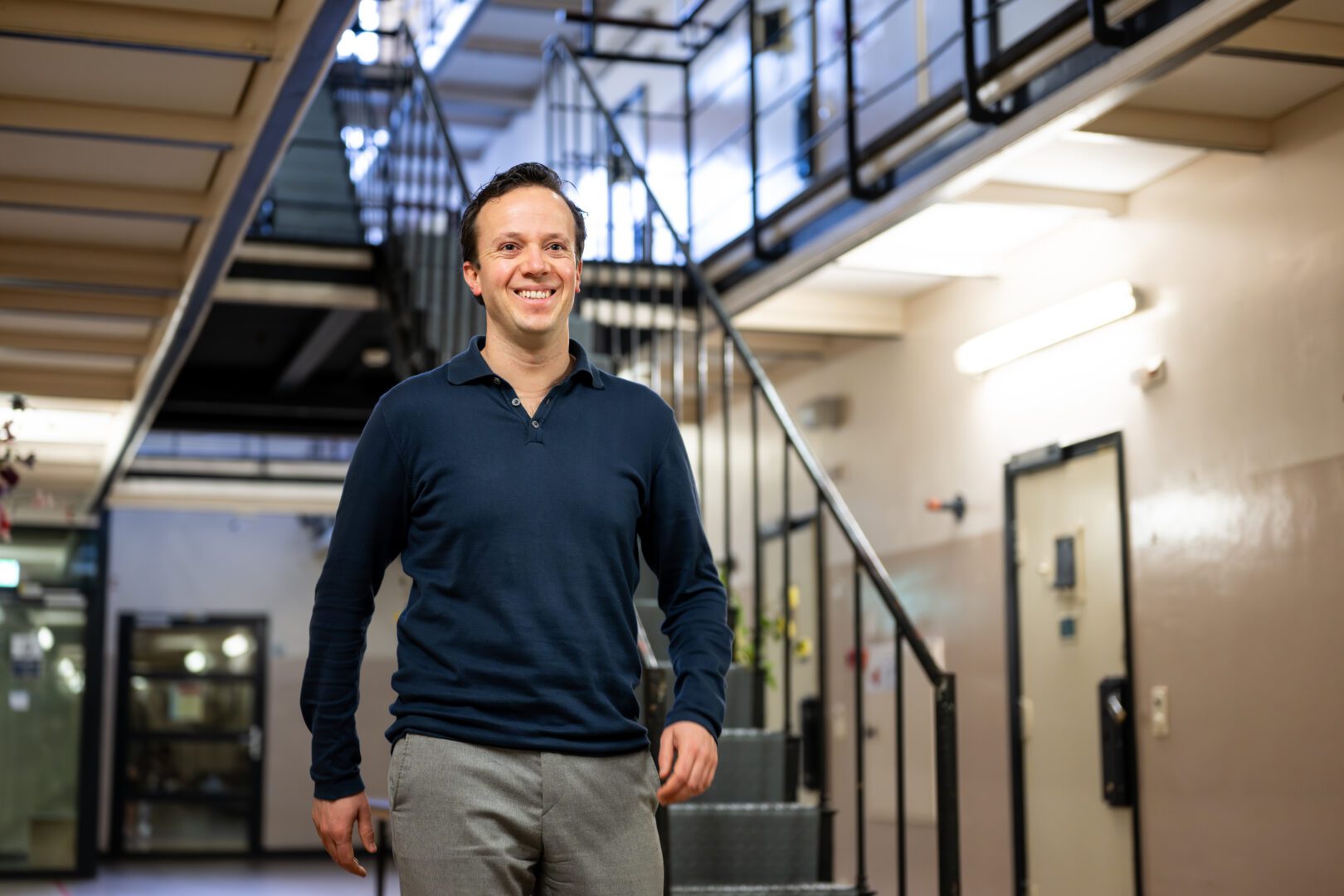
“When we develop in an area with monumental buildings, that comes with a responsibility,” says Geert. “You only have one chance to get it right.” As a project developer, he is involved in the development of Wolvenplein, the former prison complex in the city centre of Utrecht. It is a collaboration between AM and development partner Levenslang, residents' association De Witte Wolf and the Municipality of Utrecht. Geert: "A location like this, right in the city centre, rarely becomes available. We take our responsibility for this historic area very seriously. That is why opening up the location and the buildings to the public is one of the key points in the plan. We are already doing this through placemaking, for example with events, a pop-up brewery and guided tours of the prison. Once the development is complete, the location will be open to the public." Development partner Levenslang is developing a hotel, restaurant, community centre, short-stay accommodation, meeting rooms and office space in the former detention centre. AM is developing thirteen owner-occupied homes in the monumental front buildings and new construction with eighteen social and mid-priced rental apartments and five owner-occupied homes on the canal. Levenslang and AM are jointly developing the area surrounding the buildings. Geert: "The mix of functions strengthens the area. In the past, the prison grounds were completely closed to the public. In the future, guests of the restaurant and hotel will be able to experience what the prison looks like inside and even spend the night in the old cells.‘ In the future, walkers will also be able to walk around the canals of Utrecht. ’The historic canals next to the prison were not accessible. These will soon be reconnected to the city with walking paths."
Old and new go hand in hand
‘It's all about cherishing, restoring and strengthening,’ explains Geert. Careful choices are made about what to preserve and what not to preserve. The monumental prison building was constructed in 1856. In 1877, a wing was extended and in 1903 a chapel was added. Subsequently, buildings were added until the prison closed in 2014. These ranged from an expedition and a gymnasium to covered corridors between the buildings. Geert: "The buildings added after 1903 did not have the same architectural value as the older buildings. These buildings will therefore be demolished and two contemporary new buildings will be added to the canal. This will create more openness in the area. The paved courtyards will make way for green courtyards." In addition, it was decided to make the site car-free in order to green the former car park and make it part of the canal park. A footbridge will be built from the forecourt to the other side of the canal, where residents and guests can park. Careful considerations are also being made for the development of the homes. The homes in the monumental front buildings will all have unique floor plans. Due to the historical structure of these buildings, we cannot and do not want to create standard layouts here. The surprising angles and spaces that this creates actually contribute to the charm. The new homes that connect to the old prison wall and the canal are also unique. We are working with BiermanHenket architects, who have extensive experience with projects that combine old and new. On the one hand, they adhere to the historical style, while on the other hand, they consciously opt for specific additions and modern contrasts, because it is also important to show which elements and buildings have been added in modern times. They always make careful considerations in this regard. Of course, the architects coordinate all their choices with the Utrecht Environmental Quality Committee and the Cultural Heritage Agency of the Netherlands."
You can enjoy the character of the heritage and the unique location, but with all the comforts and sustainability of today.
Urban vibrancy, village tranquillity
The future residents and users will experience the best of both worlds, says Geert: ‘You can enjoy the character of the heritage and the unique location, but with all the comforts and sustainability of today.’ The homes will not have large gardens, but they will all have their own terrace and/or balcony. This is a conscious choice that contributes to the openness of the area. Geert: ‘This creates space for communal green courtyards with, for example, a vegetable garden, an orchard and a small park.’ He expects the target group for the homes to be broad, with a common denominator of a love for monuments, greenery and urban liveliness. "It's ideal for people who love that. You can walk from your home around the canal or through the city. There is always a pleasant bustle thanks to the offices, restaurant and hotel. On summer evenings, you can go straight to the terrace, and the car-free green courtyards are ideal for children to play in." Although Wolvenplein has an urban dynamic thanks to its mix of functions, it also has the characteristics of a village with a focus on socialising and community. In the future, the area will no longer be locked away, but the old walls will preserve its sheltered location.